Omani Frankincense History: From Dhofar to Modern Homes
The story of Omani frankincense is larger than a pleasant scent in a room. In Oman, luban has long been part of hospitality, daily routines, trade, and cultural memory. A small piece of resin warming on a burner can make a home feel prepared for guests, reconnect someone with Dhofar, or add a calm resinous note to a familiar evening ritual.
For a modern buyer, that history is useful because it gives context to what they are choosing. Frankincense is not one uniform product, and it is not simply a decorative fragrance trend. It is a natural aromatic resin with regional traditions, practical handling needs, and a character that changes with heat, quantity, and ventilation. This guide explains where Omani frankincense fits in the country’s heritage, what the names on a packet can and cannot tell you, and how to enjoy it respectfully at home today.
The short answer: why is Omani frankincense important?
Omani frankincense is closely associated with southern Oman, especially Dhofar, where frankincense trees and their resin have shaped local trade and culture for centuries. The resin has travelled through historic trade networks and remains meaningful in homes and hospitality today. Its importance comes from that combination of landscape, craftsmanship, commerce, and lived tradition—not from a single marketing label or a promise that every piece will look or smell identical.
What frankincense is, and why it is called luban
Frankincense is an aromatic resin obtained from certain Boswellia trees. When the resin is gently warmed, it releases a fragrance that many people describe as fresh, resinous, woody, citrus-like, or balsamic. The exact impression varies. Size of the resin, storage, heat source, room size, and personal preference all affect the experience.
In Arabic, the word luban is widely used for frankincense. In Oman, customers may also hear names connected with regions, grades, colours, or common local buying habits. These terms can be useful, but they are not a substitute for a clear product description. A thoughtful retailer should help shoppers understand whether they are looking at natural resin for incense use, an essential oil, a fragrance blend, or another related product.
If you are choosing resin for home fragrance, begin with the actual use case: a quiet room, a family gathering, a gift, or a traditional incense routine. The right choice is the one that fits the setting and the burner you use.
Dhofar and the roots of the Omani frankincense tradition
Dhofar is central to the story because its climate and landscape have supported the long-standing relationship between local communities and frankincense trees. The region is not merely a backdrop for a product; it is part of the context that gives Omani frankincense its cultural significance.
The UNESCO Land of Frankincense site recognises a group of archaeological locations in Oman that illustrate the importance of this trade. The record includes the remains of ports, settlements, and places connected with the production and movement of frankincense. It is a useful reminder that the resin’s history was never only about fragrance. It also connected people, coastlines, markets, and long-distance exchange.
A material shaped by season and handling
Frankincense is a natural material. That means it can vary in shape, shade, and aroma. A packet with perfectly matching pieces is not automatically better than one with visible variation, and a pale piece is not a universal proof of quality. What matters more for a buyer is whether the material has been handled and described honestly, stored well, and sold for a clear purpose.
This is also why it is better to avoid sweeping claims such as “the only real grade” or “the strongest fragrance.” Natural resin performs differently when it is warmed in different places. A sensible approach starts with a small amount and lets the aroma develop before adding more.
How frankincense travelled beyond Oman
For centuries, aromatic resins were valuable in trade because they were portable, distinctive, and useful in many social and religious settings. Frankincense from southern Arabia moved through regional routes by land and sea, reaching markets far beyond Oman. That movement helped establish the resin as a familiar material in parts of the Middle East, Africa, the Mediterranean, and Asia.
It is tempting to reduce this history to one dramatic route or one destination. In reality, trade changed over time. Ports developed, merchants formed new relationships, and demand shifted between places and eras. The lasting point is simpler: frankincense from Oman was part of a connected commercial world long before modern retail and tourism.
Today, that heritage is visible in a different form. Visitors may encounter luban in a souq, at a family home, in a hotel, or as a gift from Oman. Locals may use it in a routine that feels ordinary rather than ceremonial. Both experiences are valid. Tradition stays alive because people adapt it to real homes and real lives.
Frankincense in Omani hospitality and home fragrance
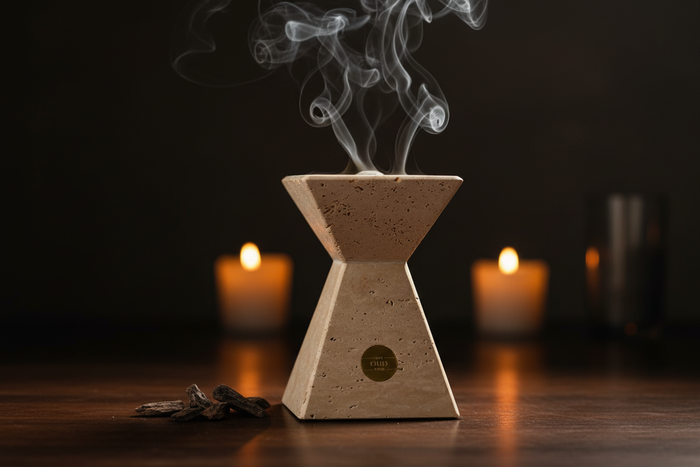
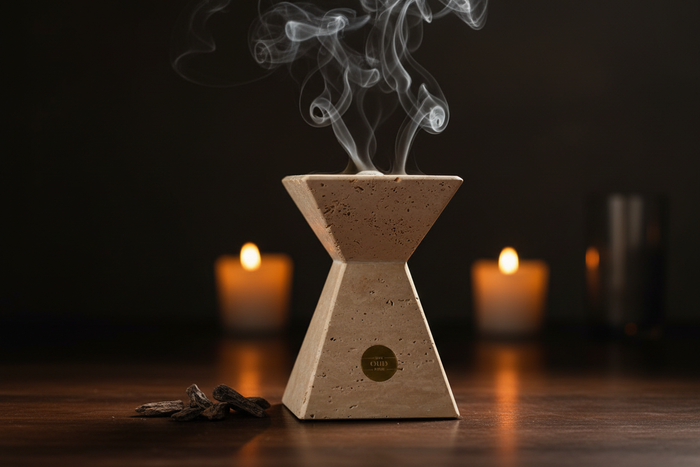
In many homes, incense is about atmosphere and welcome. The goal is rarely to make a room overwhelmingly smoky. A modest amount of resin, warmed with care, can create a clean and inviting fragrance before guests arrive or after a room has been aired and tidied.
A simple modern home routine
A practical routine does not need special claims or complicated equipment:
- Place a stable burner on a heat-safe surface away from curtains, paper, and children.
- Start with one small piece of resin, especially in a compact room.
- Allow the fragrance to develop before deciding whether you need more.
- Keep light ventilation where possible.
- Never leave a hot burner unattended.
An electric incense burner can give a gentler, more controlled result. Charcoal can create a stronger and faster aroma but requires more care with heat and ash. Neither is automatically superior; the better option is the one you can use safely and consistently.
Why less is often better
With frankincense, increasing the quantity does not always improve the fragrance. Too much heat or too much resin can make the room feel heavy and can hide the fresher aspects of the aroma. Starting small is more economical, easier to control, and more considerate when other people share the space.
If you enjoy a broader incense routine, compare natural resin with bakhoor blends. Bakhoor is generally a prepared fragrance blend, while frankincense resin is a single natural material. The two can complement each other, but they offer different kinds of experiences.
How to choose Omani frankincense without relying on myths
When shopping, it helps to separate useful information from assumptions. The following checks are more practical than judging resin from a photograph alone.
Read the product description
Look for a clear statement of what you are buying, how it is intended to be used, and how it should be stored. A helpful description may mention the piece size, whether the product is resin or oil, and basic use guidance. If an ingredient list or usage note is available, read it before ordering.
Think about your burner
Large pieces can be useful for some incense routines, while smaller pieces make it easier to control quantity. If you use an electric burner, you may prefer pieces that are easy to portion. If you are new to resin incense, choose a product that gives straightforward guidance and start with a very small amount.
Do not treat colour as a final verdict
Colour and clarity are often discussed by buyers, but neither tells the entire story. The aroma, condition, intended use, and seller transparency matter more than one visual signal. Natural variation should be expected.
Store it away from moisture and strong odours
Keep resin in a clean, dry, airtight container. Store it away from direct sun and from strongly scented products that could affect the aroma. This is particularly important if you keep more than one type of incense at home.
For current selections and product-specific instructions, browse The Oud Bank’s Luban collection. Availability, format, and product details can change, so the live product page should always be your final reference.
Common misconceptions about frankincense
“The palest pieces are always the best”
Some customers have a preference for light-looking resin, but appearance alone does not establish what will suit your fragrance preference or burner. Natural material varies. Use the description, condition, and intended use to guide your choice.
“More smoke means better quality”
Not necessarily. Heavy smoke can come from excess heat or using too much material. A clean, pleasant scent often comes from gentle warmth and careful portioning.
“Frankincense is the same as every incense product”
Frankincense resin, oud wood, bakhoor, and perfume oils are related through fragrance culture, but they are different products. They need different handling and create different effects. The right choice depends on whether you want to scent yourself, a room, fabrics, or a gathering.
“A historical product should only be used in one traditional way”
Tradition can be respected while still adapting to a modern home. A small electric burner, careful storage, and a lighter fragrance routine can all be practical ways to enjoy luban today.
A quick checklist before you buy or burn luban
- Confirm that the product is resin intended for incense use.
- Check the product description for storage and safety notes.
- Match the piece size to your burner and room size.
- Start with a small amount.
- Use a stable, heat-safe burner with ventilation.
- Keep the product dry and away from direct sunlight.
- Read the live product page before purchasing, especially if buying as a gift.
Frequently asked questions
Is Omani frankincense the same as luban?
Luban is the Arabic word commonly used for frankincense. “Omani frankincense” usually refers to frankincense associated with Oman, particularly its southern heritage and trade tradition. Check the product page for the exact format and origin information available.
What is the safest way to use frankincense at home?
Use a stable burner on a heat-safe surface, start with a small piece, keep the room lightly ventilated, and never leave heat or charcoal unattended. Follow any instructions supplied with the burner and product.
Can I use frankincense and bakhoor together?
They can be used in the same fragrance routine, but start separately so you understand how each performs. Frankincense is natural resin; bakhoor is usually a prepared blend. Combining too much of either can make the room feel heavy.
How should I store frankincense resin?
Keep it dry, airtight, and away from direct sunlight and strong odours. Avoid storing it beside perfumed products that could transfer scent.
Does every Omani frankincense resin smell identical?
No. Natural resin can vary, and the final aroma is also affected by the burner, heat level, and environment. This is normal and is one reason to begin with a small amount.
A heritage to enjoy thoughtfully
The history of Omani frankincense connects Dhofar’s landscape with centuries of trade and with the everyday act of making a home feel welcoming. You do not need to turn that history into a performance to appreciate it. A well-stored resin, a safe burner, and a small amount used with care are enough to enjoy the fragrance on its own terms.
If you would like to explore contemporary options, visit the Luban collection and read the product descriptions before choosing. For a different home-fragrance style, explore bakhoor blends or our guide to using bakhoor at home.