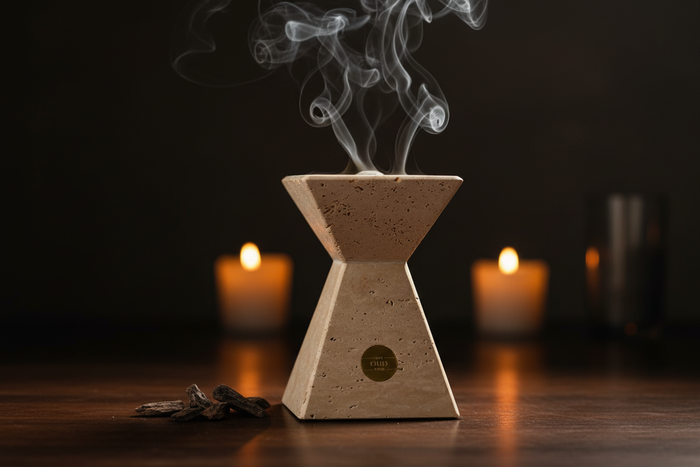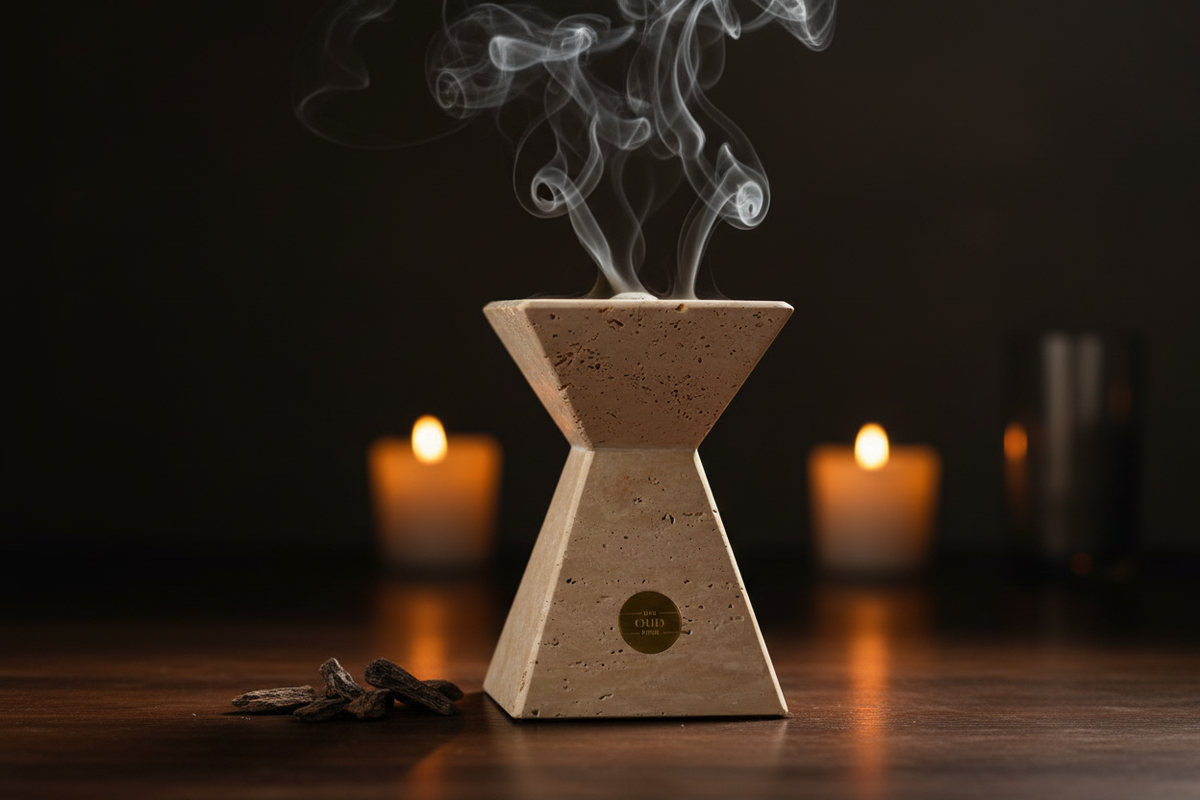
The first time you use bakhoor at home, it is easy to use too much. A small piece can perfume a room quickly, particularly when charcoal is very hot or the windows are closed. That is why the most useful advice is also the simplest: start with less than you think you need.
Bakhoor is an aromatic incense blend used across the Arab world to scent homes, clothing and gatherings. It can be warm, woody, floral, sweet, smoky or spicy depending on its ingredients and how it is heated. There is no single “correct” fragrance strength. The goal is a pleasant, controlled aroma that suits the room and the people in it.
This guide explains how to use bakhoor at home with a charcoal burner or an electric warmer, how to avoid overpowering smoke, and how to keep the process safe. It focuses on household use rather than oud-wood-specific burning techniques. If you are shopping in Oman, always confirm the current product description and instructions before use, as blends and devices differ.
What is bakhoor, and how is it different from plain incense?
Bakhoor is usually a prepared fragrance blend. Depending on the maker and product, it may include wood chips, resins, oils, spices, flowers or other aromatic materials. This makes it different from a single natural resin such as frankincense and different again from raw oud wood. The blend is designed to release fragrance when warmed.
Because recipes vary, do not assume that two products labelled “bakhoor” will behave the same way. One may release a soft floral sweetness while another creates a heavier, smoky room fragrance. Product photos cannot tell you the full story; read the description and choose according to the atmosphere you want.
The answer-first rule: use a tiny amount
For most home settings, begin with a pinch or one small piece. Wait a few minutes before adding more. Using more incense does not always improve the fragrance; it can make the room smoky, cause the aroma to feel flat, and waste the product. This small-start approach also lets you discover how a particular bakhoor performs on your burner.
Choose the right way to warm bakhoor
The burner affects both fragrance and safety. The two common options are charcoal and electric warmers.
| Method | Best for | What to expect | Main precaution |
|---|---|---|---|
| Charcoal burner | Traditional, stronger scenting | Faster heat and visible smoke | Never leave it unattended |
| Electric burner | Controlled everyday use | Often gentler and easier to repeat | Use only as directed by the manufacturer |
Using bakhoor on charcoal
Charcoal can create a rich, immediate fragrance, but it needs attention. Put the mabkhara or burner on a stable, heat-resistant surface. Keep it well away from fabric, paper, children, pets and any route where someone may knock it over. Light a suitable charcoal disc using the product instructions, then give it time to heat properly. Use tongs—never bare fingers—to place it in the burner.
Once the charcoal has settled, place a very small amount of bakhoor on top. Stand nearby and observe the fragrance. If it is too sharp or smoky, remove the blend with tongs if it is safe to do so, allow the charcoal to cool fully, and increase ventilation. Do not add water to hot charcoal, and never carry a lit burner through a crowded room.
Using an electric bakhoor burner
An electric burner is a sensible option for people who want more control and less open heat. Put a small amount of bakhoor in the designated dish, select the device setting recommended by the manufacturer, and allow it to warm gradually. A warmer is not smoke-free by definition, but it often produces a more measured aroma than direct charcoal heat.
Do not improvise by putting bakhoor on a candle warmer, cooker, or appliance not intended for incense. Electrical safety matters as much as fragrance: inspect the cable, keep the device dry, and unplug it after it has cooled when you have finished.
A step-by-step routine for using bakhoor at home
The following routine works for a small sitting room, entryway or bedroom. Adjust it for your device and ventilation, not for an assumed “standard” room size.
- Prepare the space. Open a window slightly or ensure normal airflow. Remove loose paper and fabrics from the burner area.
- Choose a stable surface. A ceramic tile, metal tray or other heat-resistant surface is safer than a sofa arm, carpet or wooden shelf.
- Warm the burner properly. Follow the charcoal or electric-burner instructions. Do not rush this stage.
- Add a small amount of bakhoor. Treat the first piece as a test, not the final dose.
- Stay present. Notice smoke, fragrance strength and how people in the room feel. Do not leave burning incense unattended.
- Finish safely. Allow charcoal to cool completely before disposal. Switch off and unplug electric equipment when cool and not in use.
This approach helps you build a reliable routine without turning fragrance into a guessing game.
How to choose bakhoor for different rooms and occasions
Think in terms of use, not a universal hierarchy of “best”. A welcoming entrance may suit a clear, noticeable fragrance. A small bedroom often benefits from a lighter touch. For a majlis or family gathering, it can be useful to fragrance the room before guests arrive, then reduce or stop burning once people are seated.
For everyday home use
Look for a blend whose description sounds close to your preference: warm woods, soft florals, spices or a cleaner resinous character. Test it when you have time to ventilate and observe it. The first test is not an occasion to fill every room.
For guests and celebrations
Use bakhoor before the gathering rather than trying to maintain constant smoke throughout it. This allows the scent to settle. If you plan to use a handheld mabkhara around guests, check that the setting permits it, keep it stable, and be mindful of people with sensitivities or respiratory conditions.
For clothing and linens
Many households enjoy scenting fabrics, but heat and smoke can damage delicate material. Keep the burner stable and at a safe distance; never place it inside a wardrobe, suitcase or closed drawer. Let garments air before storing them. A strong scent can be pleasant to one person and overwhelming to another, so moderation is especially useful for gifts.
Common mistakes when burning bakhoor
Using too much too soon
This is the most common mistake. It makes it harder to identify what you like about the blend and can leave a room unpleasantly smoky. Start small, wait, then decide.
Treating charcoal like a portable decoration
Lit charcoal is a heat source, not a styling item. Do not put it on a plastic tray, near curtains, in a car, or on a surface that can be bumped. A beautifully designed burner still needs ordinary fire safety.
Burning in a closed room
Ventilation is part of responsible use. Fragrance should not replace fresh air. If anyone coughs, feels uncomfortable or has difficulty breathing, stop burning the product, ventilate the area and seek medical advice if symptoms are severe or persist.
Assuming “natural” means risk-free
Natural materials can still create smoke, heat and strong aromas. Store bakhoor away from children and pets, follow device guidance, and do not make health or air-purification claims that the product cannot support.
Storing bakhoor so it stays enjoyable
Keep bakhoor in a closed, dry container away from direct sun and strong heat. A cupboard is generally better than a bathroom, car or windowsill. Avoid storing several strong scents loose together, because blends can pick up one another’s aroma. If you buy several varieties, label each container so you can learn which style you prefer.
Packaging also matters. Keep the original label or note the product name, especially if you purchase more than one blend. That makes reordering easier and helps you avoid accidentally mixing ingredients that should be enjoyed separately.
Managing scent in a shared home
Household fragrance is a shared decision. Before burning bakhoor in an open-plan home, check whether anyone is sensitive to smoke or strong perfume. A short, supervised session before guests arrive is usually easier to manage than continuous burning while everyone is in the room. In apartments, keep windows and building rules in mind; smoke can travel into shared corridors or neighbouring spaces.
If you are unsure whether a blend suits your home, try it first during the day with ventilation and no occasion pressure. Do not use fragrance to conceal a gas smell, mould, smoke damage or another household problem. Address the source of the odour instead. Bakhoor is for aroma and hospitality, not a substitute for cleaning, ventilation or safety maintenance.
Keep a lid or heat-safe cover nearby only if it is designed for your burner; never smother charcoal with unsafe materials.
How to shop for bakhoor online in Oman
Use a product page as a decision tool. Check the fragrance description, the format, the available size, and the current delivery information. The Oud Bank’s live product catalogue is a verified place to browse its current range; do not assume a blend is in stock because it appeared on an older social post.
If you are new to oud, incense or bakhoor, the Oud Bank FAQ recommends choosing according to the character you enjoy and contacting the team when you need help narrowing down options. That is more practical than choosing only by price or packaging. For the wider fragrance context and the brand’s stated sourcing approach, see the About Us page.
Frequently asked questions
How much bakhoor should I use at home?
Start with a pinch or one small piece. Wait a few minutes before adding more, particularly in small or closed rooms.
Can I use bakhoor without charcoal?
Yes, if you use an electric incense burner designed for bakhoor. Follow the device manufacturer’s instructions and use only a small amount.
Is it safe to leave a bakhoor burner unattended?
No. Never leave burning charcoal, heated resin or an operating electric burner unattended.
Why does my bakhoor smell too smoky?
The heat may be too intense, the amount may be too large, or the room may need more ventilation. Use less next time and let the charcoal settle before adding the blend.
Can I use bakhoor in a bedroom?
You can scent a bedroom with a small amount and good ventilation, but do not burn incense while sleeping and do not leave the burner unattended.
How should I store bakhoor?
Keep it sealed, dry, cool and away from direct sunlight or other strong fragrances.
Conclusion
The best way to use bakhoor at home is controlled, simple and safe: choose a suitable burner, begin with a small amount, keep fresh air moving, and stay with the heat source until you are finished. Once you learn how one blend behaves in your space, you can adjust the amount for an everyday room, a special gathering or a gift ritual. Browse The Oud Bank’s current catalogue for live availability, and use its FAQ if you need help choosing a fragrance style.
Sources and editorial notes
- Oman Information Center: Frankincense and incense in Omani culture
- International Meeting on Frankincense research abstract, 2023
- Safety guidance in this article is conservative household fire and ventilation guidance; it is not medical advice.
Quality control
| Check | Status | Notes |
|---|---|---|
| Approximate body length | Pass | ~1,970 words excluding metadata/QC |
| Primary keyword | Pass | H1, introduction, relevant H2 and metadata |
| Intent satisfaction | Pass | Clear household how-to and buying support |
| Internal links | Pass | Verified live URLs only |
| Scope separation | Pass | Avoids duplicating oud-wood-specific burning content |
| Factual claims | Pass | No health, purification or product-performance promises |
| AEO/GEO readiness | Pass | Answer-first guidance, table, steps and FAQs |