
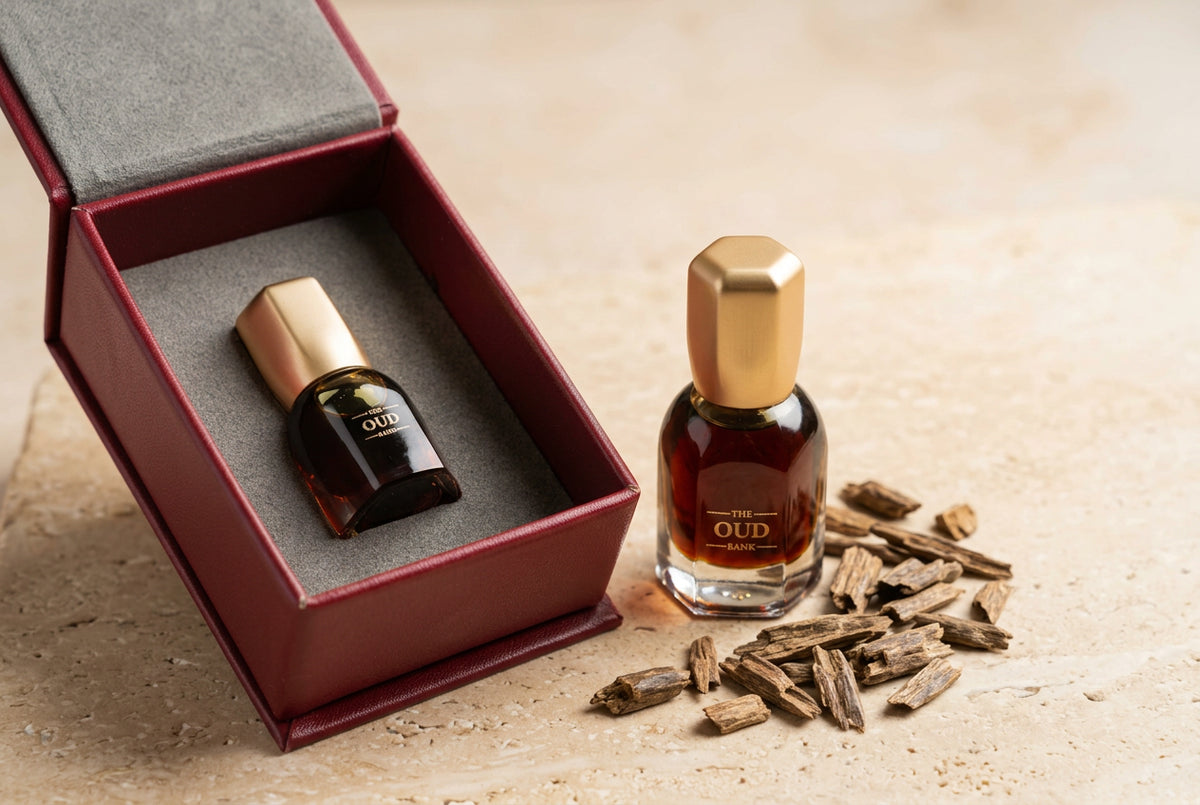
Buying oud online starts with a simple question. What kind of fragrance experience are you looking for? You might want oud oil for personal wear, oud wood to burn as incense, or a bakhoor blend for a gathering. Decide which format fits your plans, then read the scent and size descriptions before comparing prices or origins.
Start with how you’ll use it
Oud oil, oud wood and bakhoor blends serve different purposes. Make sure the products you compare suit the same use. The country of origin gives you context. Read the individual product description and ask the shop how its current options differ.
Turn scent descriptions into specific questions
Do you prefer a sweet, woody scent, or are you drawn to earthy notes? Pick two qualities you enjoy and one you’d like to avoid. Keep them in mind as you read the product descriptions or contact the shop. Scent descriptions give you a way to compare products. Individual perceptions will vary.
For example, the Aged Cambodian Oud Oil page describes a sweet, woody character with hints reminiscent of honey. That comparison describes the scent. Khas Oud Oil, a blend by Yousuf Al Harthi, combines woody notes, gentle sweetness and an earthy quality that recalls the scent of the ground after rain.
Compare sizes within the same category
Aged Cambodian Oud Oil and Khas Oud Oil come in 3, 6 and 12 mL. Check the size you’ve selected before checkout and compare prices for equivalent volumes. If you’re trying a scent for the first time, consider the smallest available size that fits your budget.
When buying oud wood, compare by weight and read the details of each option. Premium Malaysian Terengganu Oud Wood, for example, comes in 12, 24 and 36 g. Ask how the pieces and current editions differ.
Read the bakhoor ingredients
If you want bakhoor that combines wood and oil, check the ingredients listed for that blend. The Oud Bank Musaqa, for example, combines Indian Zora and Mori oud woods with an oud oil selected from the shop’s range. Its net weight is 24 g. Check the product page to see whether a blend includes any floral or other ingredients.
Build your own taste in oud
Take note of what draws you to each scent and compare it with fragrances you already know. Do you like the balance of woodiness and sweetness? Are you more drawn to earthy notes? Those observations will help you choose more precisely than broad labels such as “the best” or “luxury”.
Questions to ask before ordering
- Is this oud oil, incense wood or a bakhoor blend?
- How does the shop describe the scent of this particular option?
- Which volume or weight have I selected?
- Does the listing explain the origin and ingredients? What else should I ask the shop?
- What delivery terms and returns policy are shown when I order?
Understanding the main oud formats
Oud oil
Oud oil (dehn al oud) is distilled from agarwood and worn on the skin. It is concentrated, so one drop is usually enough, and it develops over several hours. Oils are sold by volume, typically 3 ml, 6 ml and 12 ml. Browse our oud oil collection.
Oud wood
Oud wood is the resinous agarwood itself, warmed on charcoal or an electric burner to scent rooms and clothing. It is sold by weight, often in 12 g, 24 g and 36 g packs, and in different formats such as chips, pieces and sheets. See our oud wood collection.
Bakhoor blends
Bakhoor combines oud wood or powder with oils and aromatics. It is burned like oud wood but has a sweeter, more composed scent. Blends are usually sold as a single pack with a stated net weight. Explore our bakhoor blends.
Perfume oils with oud
Some products combine oud with other notes such as rose, musk, coffee or tobacco. These are ideal if you enjoy oud as part of a composition. Examples include Rose Oud Oil, Musk with Oud and Oud de Havana.
How to read scent descriptions
Scent descriptions use comparisons to help you imagine a fragrance. Here is what common terms usually mean:
- Sweet: soft, rounded and approachable, sometimes with fruity, honey-like or caramel-like impressions.
- Woody: the dry, natural character of wood, from clean to rich.
- Earthy: deeper notes reminiscent of soil, rain or forest floor.
- Spiced: warm impressions similar to saffron, clove or pepper.
- Floral: a lighter, flower-like lift.
- Smoky: notes that recall incense or a gentle fire.
- Animalic: intense, leathery depth found in some Indian ouds.
These words describe impressions, not added ingredients. If you need to know exactly what a product contains, read its listed composition or ask the shop.
Comparing value fairly
- Compare like with like: oil with oil, wood with wood, bakhoor with bakhoor.
- Compare equal sizes: look at the price of the same volume or weight.
- Think about use: one drop of oil per wear means a small bottle can last many applications.
- Consider grade: premium and aged editions cost more because of their resin content, age and rarity.
For more context on pricing, read why oud is so expensive.
Choosing your first oud online
If you are new to oud, start with an approachable profile and a small size. Sweet ouds such as Trad Oud Oil and Honey Trad are popular first choices for wearing. For incense, a 12 g pack of chips such as Kalimantan oud chips or Premium Indian chips lets you learn how oud behaves on the burner. Our guide to the best oud oils for beginners has more suggestions.
Buying oud as a gift online
When buying for someone else, think about how they enjoy fragrance. Someone who wears perfume oils will appreciate an oud oil or musk; someone who loves hosting will enjoy oud wood, bakhoor or Omani frankincense. If you are unsure, a gift set that combines oil and wood, such as the Valuable Gift Box, is a safe and elegant choice. See our guide to luxury oud gifts in Muscat.
When your order arrives
- Check the product and size against your order.
- Test oils on skin, not paper, and give them time to develop.
- Try wood on gentle heat first, using a small piece.
- Store properly: oils upright and closed, wood in a sealed container, both away from heat and sunlight.
Read how to apply oud oil and how to use oud wood for bakhour for detailed guidance.
Building your collection over time
Most oud lovers build their collection gradually. Start with one oil and one wood, note what you enjoy, and add new origins or blends as your preferences become clearer. Over time you may keep a sweet oud for daytime, a deeper oud for evenings, a favourite oud wood for guests and a bakhoor for celebrations. An oud cabinet helps keep everything organised and well stored.
Why buying from a specialist matters
Oud varies widely in origin, grade and composition, and it can be difficult to judge from a photo alone. A specialist shop can explain where an oud comes from, how it smells, whether a product is a single-origin oil or a blend, and how current editions compare. That knowledge helps you avoid disappointment and choose with confidence. At The Oud Bank, our team in Muscat is happy to answer questions before you order, recommend options based on fragrances you already enjoy, and help you compare sizes and prices. Clear product pages with origin, scent character, ingredients and sizes are a good sign that a shop takes oud seriously.
Keeping notes on what you buy
Each time you try a new oud, write down its name, origin, size, how it smelled when you first tried it, and how it developed. Over a few purchases, these notes become your personal guide to which origins, profiles and formats suit you best, making every future online order easier and more rewarding.
Ready to compare?
Start with our best sellers to see the oud oils, woods and bakhoor our customers choose most, then narrow down by format and size. If you have questions, contact our team before ordering.
Frequently asked questions about buying oud online
Can I choose a scent by country of origin alone?
Use the origin alongside the description and other product details. Ask the shop how the options currently available compare.
Does “honey-like” mean the product contains honey?
A honey-like note can describe the scent alone, as in the description of Aged Cambodian Oud Oil. Check the listed ingredients whenever you want to know what a product contains.
What should I start with if I’m unsure?
Decide how you want to use the oud, then compare two or three products in the same category. Choose a size that suits you and ask the shop how the options differ before ordering a larger quantity.
If you’re looking for oil, start by comparing Aged Cambodian Oud Oil and Khas Oud Oil. For incense, explore Malaysian Terengganu Oud Wood and The Oud Bank Musaqa. The product pages give you more detail to help you choose a scent that fits your taste.


