Oud oil and oud wood come from the same broad world of agarwood, but they create very different experiences. One is worn close to the skin and changes gradually with warmth. The other is gently heated so that its aroma fills a room, a majlis, clothing, or a special occasion. If you are deciding between oud oil vs oud wood, the best choice is not necessarily the more expensive one or the one with the strongest reputation. It is the form that matches how, where, and why you want to enjoy oud.
For many buyers in Oman, both have a place: dehn al oud for personal fragrance and oud wood for traditional incense. However, buying both without understanding the difference can lead to disappointment. An oil will not replace the atmosphere of burning chips, while a beautiful wood may not be a practical substitute for a discreet personal scent during a workday.
This guide compares oud oil and oud wood in plain language. It explains how each is used, what affects scent and value, the equipment and safety considerations, what beginners should choose, and how to build a small collection without relying on marketing labels alone.
The short answer: oud oil is for wearing; oud wood is for heating
Oud oil is an aromatic oil associated with agarwood. It is usually applied in a very small amount to skin or clothing, depending on the product instructions. Its fragrance is intimate: you experience it through the day as it warms and evolves.
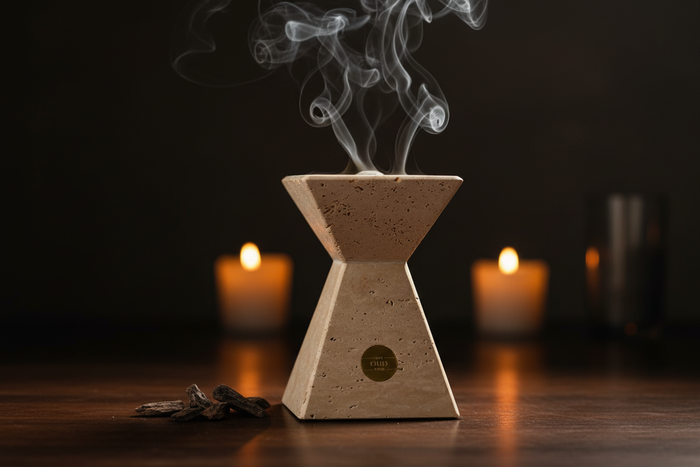
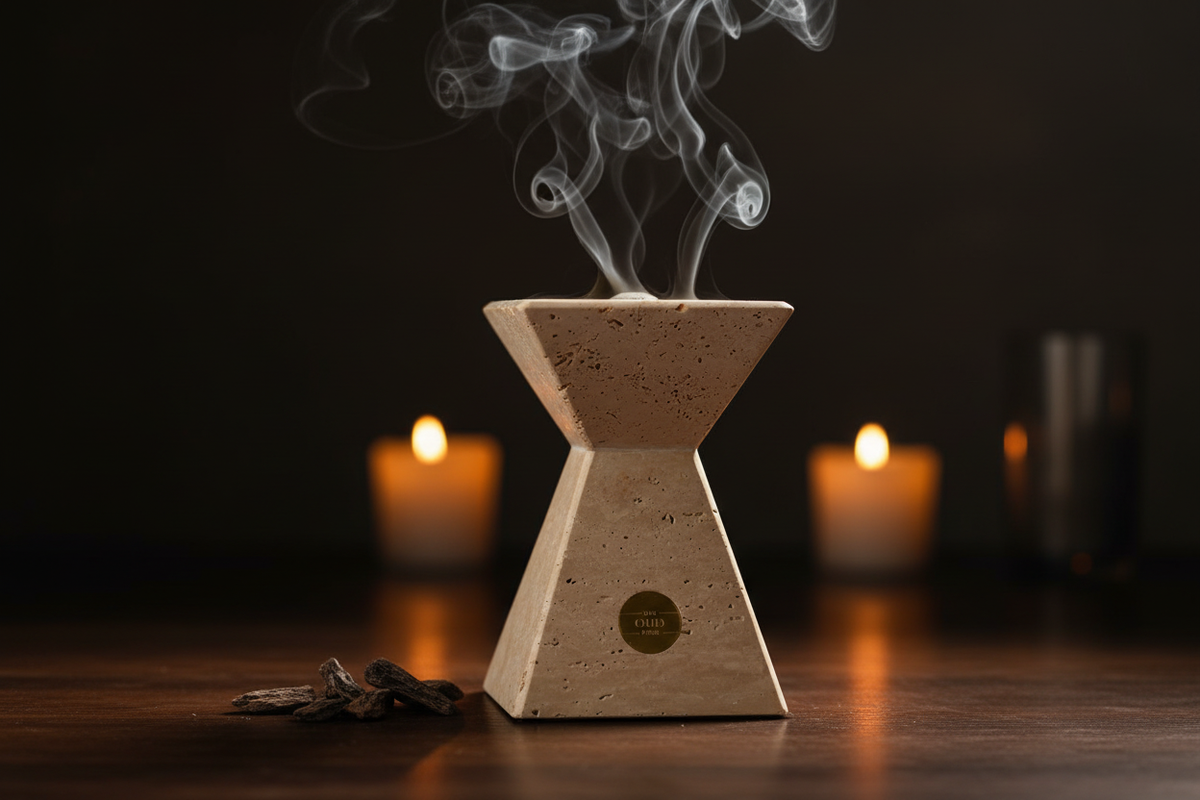
Oud wood consists of agarwood pieces, chips, or slivers that are gently heated on charcoal or an electric burner. Its fragrance is spatial: it scents the room and can be used in hospitality rituals, after cleaning, before guests arrive, or for perfuming fabrics at a safe distance from heat.
Neither format is automatically “better.” Think of them as different tools. If you want a personal scent with no burner or smoke, start with oil. If you want the atmosphere and ritual of incense, start with wood. If you enjoy oud deeply, the two formats can complement each other.
What oud, agarwood, and dehn al oud mean
The language around oud can be confusing because the word is used for wood, oil, perfume notes, and cultural traditions. CITES’ agarwood glossary lists wood chips, powder, and oil, so buyers should check the specific form named on a product page.
In this article:
- Oud wood means aromatic agarwood pieces intended for heating as incense.
- Oud oil means an oil product presented for fragrance use.
- Oud perfume may be a separate category: it can use an oud-inspired fragrance profile or mix oud with other ingredients. It should not automatically be assumed to be the same as oud oil.
This distinction matters when comparing price, application, and expectations. A perfume oil, an oud oil, and a packet of wood chips are not interchangeable products.
Oud oil vs oud wood at a glance
| Question | Oud oil | Oud wood |
|---|---|---|
| Main use | Personal fragrance | Home, majlis, clothing, and occasion scenting |
| How it is enjoyed | Applied in a tiny amount | Heated on charcoal or an electric burner |
| Scent reach | Close to the wearer | Spreads into the surrounding space |
| Equipment needed | Usually none | Burner; charcoal or electricity depending on method |
| Smoke | No smoke from application | May produce smoke, especially with charcoal |
| Best for beginners | Easy to test in small amounts | Rewarding, but requires heat control and safety |
| Main buying focus | Scent development, wearability, product information | Aroma under gentle heat, chip size, heat control, product information |
The table is not a quality ranking: intensity alone does not establish quality.
How oud oil behaves on skin
Oud oil is personal and time-based. Judge it in stages: heat, skin, climate, and application amount can affect what you perceive.
How to apply oud oil
- Start with a very small touch of oil on clean skin.
- Choose one spot, such as the wrist or the back of the hand, rather than applying several layers at once.
- Do not rub aggressively; give the oil time to settle.
- Revisit it after fifteen minutes, an hour, and later in the day.
- Keep notes on what you enjoy: sweetness, smoke, woods, florals, resin, musk, or spice.
This method builds useful scent vocabulary for online buying: “a smoother woody oil with less smoke” is more useful than “the best oud.”
Benefits of oud oil
- It is simple to carry and use without special equipment.
- It works well for personal fragrance, travel, work, and occasions.
- A tiny quantity can be enough for a full wearing experience.
Limitations of oud oil
- It may feel too intimate if you want to scent an entire room.
- A strong application can overwhelm your senses and other people nearby.
- Some buyers mistake a perfume oil or blend for a single-material oud oil if they do not read the listing closely.
- Skin sensitivity varies. Review product information and use caution if you know you react to fragrance ingredients.
For browsing, The Oud Bank’s verified Oud Oil collection includes products in this category. Its FAQ notes that oud oil can vary in colour, viscosity, and scent due to raw material, origin, production method, age, and other factors.
How oud wood behaves when heated
Oud wood is about controlled heat. The purpose is not to create the largest possible cloud of smoke. It is to release aroma steadily without scorching the chip too quickly. A small piece at moderate heat can be more enjoyable than a large piece exposed to intense charcoal.
Charcoal vs electric burner
Charcoal offers a traditional incense experience. It requires a stable burner, heat-safe surface, ventilation, and distance from fabrics and flammable materials.
An electric burner can make heat easier to control and may be more convenient for regular home use. Start at a lower setting when possible and increase gradually. The goal is aroma, not rapid burning. The Oud Bank FAQ similarly advises that controlling heat helps you enjoy the development of oud and avoid burning wood too quickly.
A careful method for using oud wood
- Place the burner on a stable, heat-safe surface.
- Let charcoal settle safely before adding wood; follow manufacturer instructions.
- Start with a small chip and adjust gradually.
- Never leave an active burner unattended; cool equipment fully before moving it.
Benefits of oud wood
- It creates an atmosphere that personal oil cannot replicate.
- It suits hospitality, gatherings, and traditional scenting routines.
- Different chips can be explored through controlled heating.
Limitations of oud wood
- It requires equipment, heat management, and fire safety awareness.
- It is not convenient for every setting, such as offices, hotels, cars, or small poorly ventilated rooms.
- High heat can waste wood and distort the scent.
- The scent may linger in textiles and enclosed spaces longer than intended.
The Oud Wood collection is a verified starting point for comparing wood products, while the store’s article How to Use Aged Oud Wood for Bakhour can be linked as a related practical guide.
Which should a beginner buy first?
Start with oud oil if you want the easiest introduction. You do not need a burner, can test a tiny amount, and can observe how the fragrance changes. Choose a clearly described product and avoid applying too much.
Start with oud wood if the home ritual attracts you. Choose a simple burner, learn heat control, and begin with small chips.
For a gift, choose oil for a fragrance wearer and wood for someone who enjoys traditional incense. See Gifts and Bundles.
What affects the quality and value of each?
Neither oils nor woods can be judged fairly from one label or visual cue. In trade, value can be influenced by odour, resin content, origin, rarity, source material, and process. CITES cautions that there is no one globally accepted grading system.
For oud oil, assess:
- honest product naming and clear category;
- stated origin or material context when available;
- a descriptive scent profile, not only superlatives;
- practical size and use information;
- seller transparency about variation and storage.
For oud wood, assess:
- whether it is described as chips, sheets, pieces, or another form;
- intended use and heating guidance;
- aroma character as described by the seller;
- whether the seller acknowledges that appearance and scent can vary naturally;
- the availability of appropriate burners or accessories.
Do not use darkness, weight, thickness, smoke volume, or price as a stand-alone proof. The Oud Bank’s FAQ specifically states that darker colour is not automatically better, heavier wood is not automatically better, and thick smoke alone does not establish quality.
Common mistakes when choosing between oud oil and oud wood
Buying the strongest option first
Beginners sometimes equate “strong” with “best.” A balanced scent or gently heated small chip often teaches you more than an overpowering first session.
Applying too much oil
Oud oil is concentrated. Over-applying makes it hard to recognise the subtler stages of a fragrance. Begin small and add only after you understand the strength.
Overheating wood
Scorching a chip can produce smoke without allowing the aroma to develop beautifully. Manage heat patiently; a small piece and a moderate temperature are sensible starting points.
Treating all “oud” products as identical
An oud perfume, oud blend, oud oil, and oud wood may all be worthwhile products, but they answer different needs. Compare category, size, intended use, and description before comparing price.
Ignoring the environment
Oud wood that feels perfect in a large, ventilated majlis may be too much for a bedroom. Oud oil that feels subtle outdoors may be strong in a car. Consider the space, weather, and occasion.
Building a small, useful oud wardrobe
Build a simple set around use:
- One wearable oud oil for personal use.
- One oud wood option for the home or guests.
- One complementary category such as musk, rose, or frankincense if you enjoy layering or changing the atmosphere.
- One practical accessory—for example, a suitable burner or charcoal clip—if you choose wood.
Oud oil buyers can browse musk, while wood buyers can consider oud accessories.
FAQ: oud oil vs oud wood
Is oud oil stronger than oud wood?
They project differently. Oud oil is usually close to the wearer and develops over time. Oud wood is heated and can scent a room. “Stronger” depends on the amount used, space, heat, and product.
Can I burn oud oil on charcoal?
Do not assume an oud oil is intended for burning. Follow the seller’s specific use instructions. Oils for personal fragrance and wood for incense are different formats.
Is oud wood safe to use at home?
It can be used carefully with suitable equipment, a heat-safe surface, ventilation, and constant supervision. Never leave charcoal or an active burner unattended, and keep it away from flammable materials.
Does oud wood last longer than oud oil?
They are used differently, so there is no simple comparison. A small amount of oil may last through a day on skin, while a small wood chip may scent a room for a session. Value depends on your use pattern.
Should I choose oud oil or oud wood for a gift in Oman?
Choose oud oil for someone who enjoys wearing fragrance. Choose wood for someone who enjoys incense, hospitality, or traditional home scenting. If you do not know their preference, select a smaller or more versatile format.
Why does oud wood smell different from oud oil?
They are experienced through different methods. Heating wood releases an aroma into the air, while an oil interacts with skin warmth and develops over time. Raw material, origin, and production also influence both.
Conclusion
The choice between oud oil and oud wood comes down to experience. Choose oil when you want a portable, personal fragrance that develops quietly on skin. Choose wood when you want the ritual, warmth, and room-filling presence of incense. A good first purchase is not necessarily the rarest or most intense option; it is one with clear information, a use that fits your life, and a scent direction you genuinely enjoy. Explore verified oud oil and oud wood categories separately, then let your own careful testing guide the next choice.
Sources and editorial notes
Quality control
| Check | Status | Notes |
|---|---|---|
| Approximate body length | Pass | 2,086 words excluding metadata, sources, and QC. |
| Primary keyword placement | Pass | Used in H1, introduction, answer-first section, title and metadata. |
| Search intent | Pass | Direct comparison for informational and purchase-research users. |
| Internal URLs verified | Pass | All linked collections, blog, FAQ, and gift page appear in the English sitemap/live site. |
| Factual claims sourced | Pass | Agarwood terminology, grading caution, and store-specific guidance are attributed. |
| Safety language | Pass | Avoids unsupported health claims; gives cautious charcoal guidance. |
| AEO/GEO readiness | Pass | Includes an answer-first section, comparison table, how-to steps, and concise FAQs. |
| Schema recommendation | Pass | BlogPosting and BreadcrumbList recommended; no assurance of FAQ rich results. |