
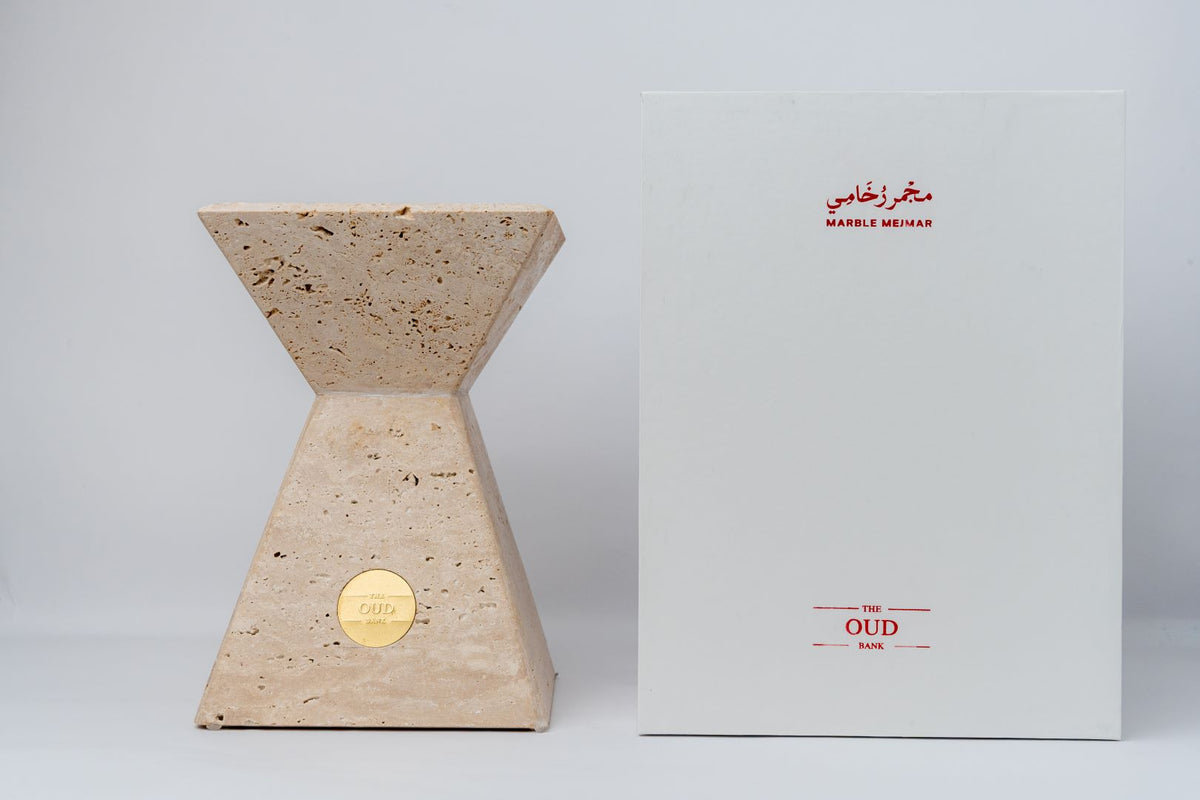
Your incense burner shapes how oud and bakhoor perform: how evenly they heat, how much smoke they make, and how easy they are to use every day. Here is how to choose between a traditional majmar or mabkhara and an electric burner.
Majmar and mabkhara: what is the difference?
Both words describe a traditional charcoal incense burner. Majmar (or mejmar) often refers to a bowl-style burner, while mabkhara is the general word for an incense holder, often with a handle so it can be passed around the majlis. In practice, the terms are used interchangeably.
Traditional charcoal burners
Pros: authentic ritual, strong scent projection, ideal for scenting clothing and large rooms.
Cons: needs charcoal and care; produces more smoke.
Options at The Oud Bank include the Marble Majmar (Big, Small and Round), the American walnut Wooden Incense Burner and the Covered Walnut Burner.
Electric burners
Pros: no charcoal, controllable heat, less smoke, convenient for daily use and offices.
Cons: needs power; slightly softer projection.
Low, steady heat from an electric burner is gentle on fine oud wood and lets its aroma unfold slowly.
Material and size
- Marble and stone stay stable and look elegant, ideal for display.
- Wood burners usually have a heat-resistant bowl inside; they are warm to the eye and easy to carry.
- Size: choose a larger burner for a majlis and a smaller one for bedrooms or clothing.
What else you need
- Incense charcoal for traditional burners;
- A charcoal clip or tongs to handle hot coal;
- Silica grains to insulate the bowl;
- A torch lighter to light charcoal quickly.
Prefer everything together? The Bankit and Calnut sets include a burner and accessories.
Safety tips
- Place the burner on a stable, heat-resistant surface away from curtains.
- Keep it out of reach of children and pets.
- Never leave lit charcoal unattended, and ventilate the room after use.
- Let charcoal and the bowl cool completely before cleaning.
Ready to burn? Follow our step-by-step guide to using bakhoor at home.
The mabkhara in Omani hospitality
In Oman, the incense burner is more than a household object. When guests visit, the host often passes the mabkhara so each person can scent their clothing, hands or headdress before leaving. At weddings and Eid gatherings, burners are kept glowing throughout the event. A beautiful mabkhara on display signals care and welcome, which is why many families own several: an everyday burner, a larger one for the majlis and a special piece for occasions.
Charcoal vs electric: a closer comparison
- Scent: charcoal gives stronger smoke and fuller projection; electric gives a gentler, cleaner aroma that lets subtle oud notes come through.
- Convenience: electric burners are ready in minutes with no lighting or ash; charcoal takes a few minutes to light and needs cleaning afterwards.
- Control: electric burners usually offer adjustable heat; with charcoal you control heat by letting the coal settle and by how close you place the bakhoor.
- Tradition: charcoal burners are part of the classic ritual and are expected at many gatherings.
- Portability: charcoal mabkharas can be carried around a room freely; electric burners need a socket.
Many households use both: an electric burner for daily scenting and a traditional mabkhara for guests and occasions.
Choosing by material
Marble and stone
Stone burners are heavy, stable and elegant. They hold heat well and look beautiful on display in a majlis or entrance. Our Marble Majmar comes in Big, Small and Round options to suit different spaces.
Wood
Wooden burners are warm and natural in appearance and lighter to carry. Our American walnut burner comes in gold or silver finish, and the covered walnut burner adds a lid that helps contain ash and smoke when not in use.
Sets and combined pieces
If you want a coordinated look, an incense set brings the burner, container and accessories together. Calnut combines a calcite container with a stone-inlaid walnut lid, a walnut burner and a matching tray, while Bankit includes a walnut burner with Hojari frankincense and accessories.
Choosing by size and use
- Large majlis or hall: a bigger burner that can hold more charcoal and project scent widely.
- Living room or bedroom: a medium or small burner for gentle scenting.
- Scenting clothing: a burner with a handle or a stable base you can place beneath a garment safely.
- Passing to guests: a lighter mabkhara with a comfortable grip.
How to set up a charcoal burner
- Fill the bowl with silica grains to protect the burner and stabilise the coal.
- Hold a piece of incense charcoal with a clip and light it with a torch lighter until it glows evenly.
- Place it on the grains and wait until a light layer of ash forms.
- Add a small piece of oud wood, bakhoor or frankincense.
- When finished, let the charcoal burn out and cool completely before emptying the bowl.
Cleaning and caring for your burner
- Empty cooled ash regularly so it does not build up.
- Sift and refresh silica grains when they become dark or clumped.
- Wipe resin residue from metal bowls once cool; stubborn residue can be loosened gently.
- Clean marble with a soft, dry or slightly damp cloth; avoid harsh chemicals.
- Keep wooden burners away from water and direct heat sources other than the bowl.
Choosing an incense burner as a gift
An incense burner is one of the most practical and lasting gifts in Omani culture, used at every gathering for years. For newlyweds or a new home, a marble majmar or the Calnut set is a beautiful choice. Pair the burner with a bakhoor or a pack of oud wood so it can be used right away. See more ideas in our guide to luxury oud gifts in Muscat and the Oud Bank Home collection.
What to burn in your new burner
- Oud wood for a pure, natural aroma: start with Kalimantan chips or Premium Indian chips.
- Bakhoor for a sweeter, composed scent: try Golden Blend or Musaqa Oud Bank.
- Frankincense for a clean, uplifting scent: Omani Hojari small pieces are ideal for daily use.
Mistakes to avoid with incense burners
- Adding bakhoor to charcoal that is too hot. If the coal is still sparking or very red, the bakhoor burns quickly and smells harsh. Wait until a light ash layer forms.
- Using too much at once. Thick smoke is not a sign of better scent. Add small pieces and replenish slowly.
- Skipping the silica grains. Without an insulating layer, the burner can overheat and charcoal may not get enough air.
- Placing the burner on soft or uneven surfaces. Always use a stable, heat-resistant spot.
- Emptying ash too soon. Charcoal can stay hot long after it stops glowing. Wait until everything is completely cold.
Burners for small spaces and apartments
In apartments and smaller rooms, a compact burner and a light hand work best. Use small pieces of oud wood or bakhoor, open a window or run ventilation briefly, and consider an electric burner for daily use, which produces less smoke. For scenting clothing in a small space, hold the garment over the burner for a few seconds rather than letting smoke fill the room.
Making the burner part of your décor
A well-chosen burner can be a centrepiece. Place a marble majmar on a console in the entrance, keep a walnut burner on a side table in the majlis, or display your burner alongside an oud cabinet that stores your woods and oils. Grouping your burner, charcoal, tools and incense in one tidy spot makes the ritual easier and more inviting every day.
Safety for families
If you have young children or pets, choose a heavy, stable burner that is hard to tip over, keep it on a high surface while lit, and never leave it unattended. Store charcoal and lighters out of reach. Ventilate rooms after use, particularly if anyone in the home is sensitive to smoke, and keep burners away from curtains, cushions and paper.
Summary
- Majmar and mabkhara both describe traditional charcoal incense burners.
- Choose charcoal for tradition and projection, electric for convenience and gentle heat.
- Pick a material and size that suits your space and how you use it.
- Use silica grains, quality charcoal and the right tools, and always follow basic safety steps.
Browse all our incense burners and accessories.
Frequently asked questions
Is an electric burner better for oud wood?
Many oud lovers prefer gentle electric heat for fine oud wood because it releases aroma slowly without burning the wood. Charcoal gives a stronger, more traditional smoke.
Can I use the same burner for oud, bakhoor and frankincense?
Yes. Simply clean the bowl or change the foil between uses if you want to avoid mixing scents.
How long does incense charcoal last?
A piece of incense charcoal typically glows long enough for several additions of bakhoor or oud. Let it burn out completely before disposal.
Do I need special charcoal for incense?
Yes. Use quick-lighting incense charcoal made for burners, not barbecue charcoal, which burns hotter and can leave an unpleasant smell. Keep charcoal dry and sealed so it lights easily.


