
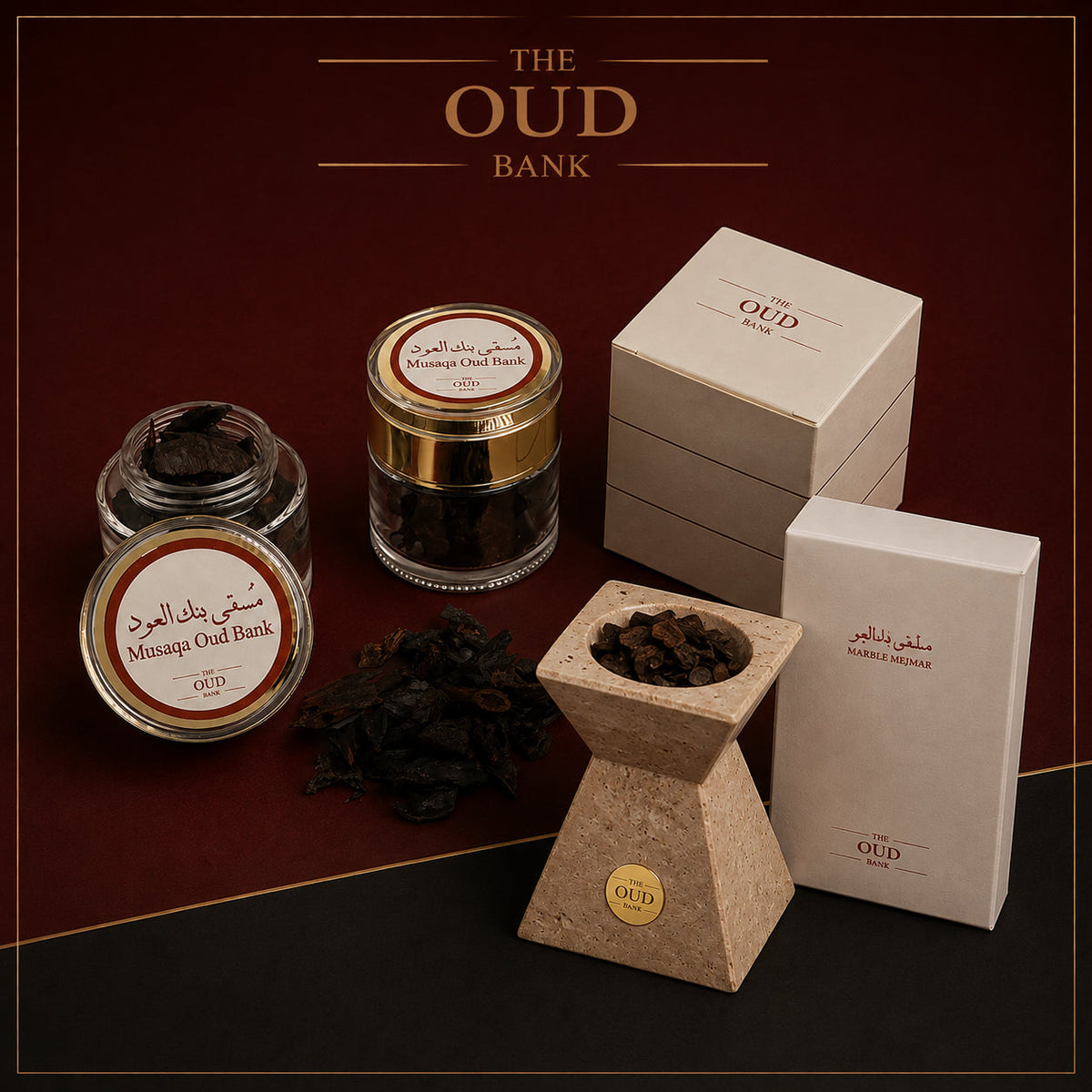
Ask an oud lover about their favourite and they will often answer with a place: Cambodian, Hindi, Trat, Kalimantan. Origin is one of the biggest influences on how oud smells, because local tree species, soil, climate and distillation traditions all differ. Here is a practical overview of the main origins you will find at The Oud Bank.
Cambodian oud
Cambodian oud is loved for its sweetness, often described as fruity or honeyed, with a smooth woody base. It is a favourite for both oil and incense. Try Aged Cambodian Oud Oil or Oud Amber bakhoor, made with Cambodian Pursat oud.
Indian (Hindi) oud
Indian oud, especially from Assam and Manipur, is known for depth and intensity: earthy, leathery, sometimes sharp or animalic. Collectors prize it; beginners may prefer to start elsewhere. Explore Indian Assam Luxury, Indian Anfal oil, or wood such as Ball Mori and Indian Mal.
Thai (Trat) oud
Oud from Trat province in Thailand is typically light, sweet and floral, making it one of the most approachable profiles. See Trad Oud Oil, Royal Trad and Premium Trat Angles wood.
Malaysian oud (Terengganu)
Malaysian oud from Terengganu offers a clear aromatic character with balanced sweetness, and premium pieces are thick and resin-rich. Compare Malaysian Terengganu with Premium Terengganu oud wood.
Indonesian oud (Kalimantan and Papua)
Indonesian oud is often woody, clean and incense-like, with some selections showing cool or fruity nuances. Our range includes Kalimantan oud oil, Kalimantan Malino and Bontinyak wood, and Jayapura chips from Papua.
Burmese oud
Burmese oud varies widely, from the floral character of Bormi Sultani to the honeyed woodiness of Burmese Kalyan and the spiced Matchina wood.
Laotian and Vietnamese oud
Laotian oud often combines woody depth with caramel-like sweetness, as in our Laotian Oud Oil. Vietnamese oud is typically spiced and pronounced; try Vietnamese chips or sheets.
How to use origin when choosing
- Like sweet and soft? Start with Trat or Cambodian.
- Like deep and intense? Explore Indian oud.
- Like clean and woody? Try Indonesian or Malaysian.
Origin is a guide, not a rule. Age, grade and distillation matter too, which is why smelling and comparing is always worthwhile. Read what is oud for the basics.
Why origin changes the scent
Several factors explain why oud from different countries smells so different:
- Tree species: different Aquilaria species grow in different regions, and each produces resin with its own chemistry.
- Soil and climate: humidity, rainfall and soil influence how trees grow and how resin forms.
- How resin is formed: wild infection, natural injury or cultivated inoculation each affect the profile.
- Age: older resin and longer-aged oils tend to be smoother and deeper.
- Distillation traditions: soaking time, equipment and the length of distillation differ by region and by distiller.
This is why it is more useful to think of origin as a starting point than as a guarantee. Two Cambodian oils can still differ noticeably.
Comparing oud oils and oud wood by origin
Origin matters for both oil and wood, but the experience is different:
- Oil shows the full arc of the scent on skin over many hours.
- Wood shows the aroma of the resin as it warms: often sweeter and more immediate.
Many collectors enjoy comparing the same origin in both forms, for example Cambodian oil and Cambodian-based bakhoor, or Indian oil and Indian wood such as Visa Mori Black.
A closer look at Indian oud woods
Indian oud wood is sold under traditional trade names that describe the shape or source of the pieces:
- Mori: wood from north-east India, often in crescent-like pieces. Ball Mori offers small pieces; Visa Mori Black larger ones.
- Mal ("Fingers"): long, finger-shaped pieces from Manipur, such as Indian Mal.
- Chips: smaller pieces for everyday incense, such as Premium Indian Oud Chips.
Indian woods are typically spiced and warm when heated, and they are popular for scenting clothes and majlis spaces.
Thai (Trat) oud in more detail
Trat oud is one of the most approachable profiles for newcomers and also a favourite of experienced wearers who enjoy sweetness. In wood form, pieces such as Premium Trat Angles give a sweet, rounded aroma. In oil form, our Trad range lets you compare a light everyday oil, a sweeter edition (Honey Trad) and a more expressive one (Royal Trad).
Indonesian oud: Kalimantan and Papua
Indonesia is one of the largest sources of oud today, with wide variety between islands. Kalimantan (Indonesian Borneo) often gives clean, woody profiles. Within our range, Kalimantan Malino shows fruit-like nuances, while Kalimantan Bontinyak is more pronounced and woody. From Papua, Jayapura chips have a woody character with a cool aromatic impression.
Malaysian Terengganu
Terengganu oud is valued for its clear aromatic character. Our standard Malaysian Terengganu balances wood and sweetness, while the Premium Terengganu selection features thicker, resin-rich pieces with a deeper scent. Comparing the two side by side is one of the best ways to learn how grade affects aroma.
Vietnamese oud: chips and sheets
Vietnamese oud is often spiced and pronounced. We offer it in two formats: chips for flexible everyday use and sheets, thin slices that heat evenly on an electric burner. Format affects how quickly the wood releases its scent, so it is worth trying both.
Origin and blending
Blends bring different origins together to create balance. Our Andalus Blend combines aged Burmese, Kalimantan and Laotian oud for warmth and depth, and Fawakhir brings together three aged oud oils. Blends are a good way to enjoy several origins at once.
A practical comparison table
- Cambodian: sweet, fruity, smooth. Great first "serious" oud.
- Thai (Trat): light, sweet, floral. Easiest starting point.
- Indian: deep, earthy, intense. For experienced noses.
- Malaysian: clear, aromatic, balanced.
- Indonesian: clean, woody, sometimes cool or fruity.
- Burmese: varied, from floral to honeyed to spiced.
- Laotian: woody with caramel-like sweetness.
- Vietnamese: spiced and pronounced.
How to explore origins without overspending
- Buy 3 ml oils or 12 g wood packs from two or three origins.
- Test them on separate days.
- Note which you return to most often.
- Upgrade to a larger size only for your favourites.
For help choosing, read best oud oils for beginners or contact our team in Muscat.
Cambodian oud in more detail
Cambodian oud has a long reputation in Gulf perfumery. Its sweetness is often compared to dried fruit or honey, with a soft woody base that becomes smoother as the oil ages. In incense, Cambodian oud gives a warm, rounded smoke. You can experience it in several ways at The Oud Bank: as a single-origin oil in Aged Cambodian Oud Oil, paired with rose in Rose Oud Oil, and in bakhoor form in Oud Amber, made with Cambodian Pursat oud. The Terengganu & Cambodian gift set also lets you compare Cambodian oil with Malaysian wood.
Burmese oud in more detail
Burma (Myanmar) produces oud with surprising range. Some oils, such as Bormi Sultani, have a distinctly floral character with a light touch of spice. Others, like Burmese Kalyan, are woody with honey-like sweetness. In wood form, Burmese Matchina gives a woody, spiced smoke with saffron-like nuances. Burmese oud is a good choice if you enjoy variety and want to explore beyond the better-known origins.
Laotian oud in more detail
Laotian oud is often described as warm and deep, with a caramel-like sweetness beneath the wood. Our Laotian Oud Oil shows this character clearly, and aged Laotian oud also appears in the Andalus Blend. If you like Cambodian oud but want something a little darker, Laotian oud is a natural next step.
Does origin affect how long oud lasts?
Longevity depends more on the quality and age of the oil than on the country alone, but some general patterns hold. Deep, resinous ouds such as many Indian oils tend to last a very long time on skin and fabric. Lighter, sweeter ouds may feel softer and sit closer to the skin, which many people prefer for daytime. Whatever the origin, applying to moisturised skin and layering with musk will help the scent last.
Choosing an origin for gifting
If you are buying oud as a gift and do not know the recipient's taste, sweet and approachable origins are the safest choice: Trat or Cambodian oil, or a gift set that combines oil and wood. For an experienced oud lover, a rare origin or an aged oil shows real thought. Our guide to luxury oud gifts in Muscat and the gifts collection can help you decide.
Learning to recognise origins
Recognising origins by smell takes practice. The best method is side-by-side comparison: wear two oils on different wrists, or warm two kinds of wood one after the other, and note the differences in sweetness, depth, smoke and freshness. Over time you will start to recognise the sweetness of Trat, the depth of Indian oud and the clean woodiness of Kalimantan without looking at the label.
Start your origin journey
The easiest way to begin is with a small selection from contrasting origins: a sweet Trat oil, a Cambodian oil and a pack of Indian or Kalimantan wood. Between them, they show most of the range oud can offer. Browse our full oud oils and oud wood collections, or ask our team in Muscat for a guided comparison.


